How Much Does Boiler Installation Cost in Toronto?
09 Oct, 2026
09
OctTable of contents [Show]
Most boilers don't break down on a mild May afternoon. On a night in January, when the radiators are cold and the house cools down by a degree an hour, they leave. This is usually the time that homeowners begin researching boiler installation and discover that they have no idea what a quality installation is.
It is not that there are no options. What happens is that the majority of contractor websites advertise services and cities, but fail to mention the things that will determine if your new system performs well for 20 years or for 5. It's sizing, venting, piping, and setup that determine the quality of the process.
This guide tells you what really happens during a professional installation in Toronto, Markham, and North York. You will be able to learn how long the process takes, factors that will impact the cost, and how you differentiate a careful installer from a fast one.
Signs Your Old Boiler Is Ready to Retire
Not every noisy boiler needs replacing. Some need a repair and a proper service. Still, a few signals point clearly toward replacement:
Older non-condensing boilers often run at 60 to 80 percent efficiency. Modern condensing models are rated at 95 percent AFUE or higher. On a long Ontario heating season, that gap shows up on every gas bill. If two or more of these sound familiar, get an honest assessment before the next cold snap forces your hand.
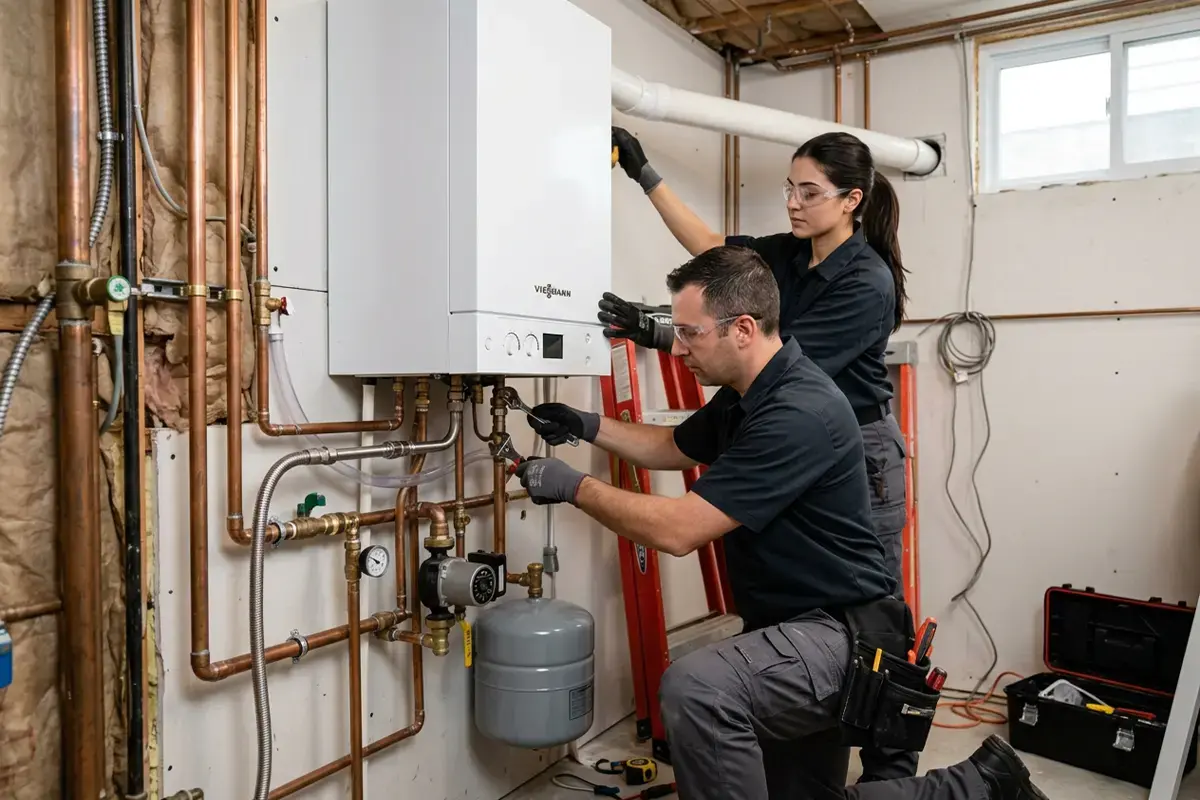
That is what a good job should look like, step by step. Use this for comparison against contractors as a checklist.
A tech checks your existing boiler, plumbing, heating units, venting, gas line and electrical wiring. An estimate should be in writing, and it must include all of the boiler and installation, permits, removal and any upgrades.
The crew turns off gas, water and power. They then drain it, disconnect it and take the old boiler away for disposal.
This step is often omitted. Sludge and rust are years old inside old pipes and radiators. Today's boilers have reduced heat exchanger surfaces that are easily fouled. A power flush, coupled with a magnetic filter or dirt separator, will help to protect your new unit and warranty.
Boilers with condensing technology are typically vented using PVC or polypropylene pipe in a side wall. They don't use the old chimney. It's a common pitfall in older homes in Toronto. If your water heater continues to vent through the chimney, then it may require a venting liner or a new venting arrangement. A good installer points this out before installation.
Good piping is just as important. To operate correctly with older rads, many modern boilers require primary-secondary piping or a low-loss header.
Gas work in Ontario is to be performed by a TSSA-registered contractor with licensed gas technicians. The crew joins the gas line, water supply, expansion tank, pressure relief valve and controls. Afterwards, they leak-test all the joints.
The technician conducts a combustion analysis to fine-tune the burner. Factory settings aren't tuned for your home. This step will determine your in-real-life effectiveness and maintain safe levels of carbon monoxide.
When you leave, you should have an understanding of how to use the pressure gauge, how to adjust the thermostat and be able to identify warning signs. Check that your CO alarms are working. They are necessary in Ontario residences that have fuel-burning appliances.
Any quotation that misses the flush, the combustion test or the venting review isn't cheaper! It only pushes the expense down the road.
This is the question we hear most. The honest answer depends on how much changes.
|
Job Type |
Typical Timeline |
|
Like-for-like swap, same location |
Same day (6 to 10 hours) |
|
Swap with new venting or a system flush |
1 full day |
|
Relocating the boiler or converting to a combi |
1 to 2 days |
|
Adding zones, new radiators, or hydronic upgrades |
2 days or more |
So, when people ask how long to install a boiler, a straight replacement in a typical Toronto home is usually done in a day. Jobs take longer when the boiler moves, the venting changes, or the piping needs rework. If you're wondering how long it takes to install a new boiler in a brand-new addition or a home that never had one, plan for extra time. Radiators, piping runs, and permits all add days. Book before the heating season if you can. Fall schedules fill fast across the GTA.
No two houses are alike, so take care with any offers that are made on the phone. Most residential replacements in the Toronto area fall somewhere between $6,000 and $15,000. Complex upgrades can raise the price. The main factors are:
Markham homeowners comparing quotes for boiler installation should line them up item by item. A low number often means something important was left out. Also ask about current utility or government incentives for high-efficiency equipment. Programs change, so confirm what's available at the time of your project.
The cheapest quote and the best installation are rarely the same thing. Look for boiler installers who:
The installation of boilers is skilled, regulated work. Trying to install boiler equipment yourself puts your safety, your home insurance, and your manufacturer warranty at risk. It's not a weekend project.
A good boiler installation comes down to a few things done properly. That means correct sizing, clean piping, safe venting, careful setup, and testing before anyone leaves. Get that right, and your system runs quietly and efficiently for decades.
Our licensed technicians handle boiler replacement, new boiler installation, combi boiler installation, radiator and hydronic heating support, annual maintenance, and emergency diagnostics across Toronto, Markham, and North York. You get a written quote, an honest recommendation, and an install done to code.
Don't wait for the first deep freeze to make this decision. Book your in-home estimate with Air Leaders for a licensed HVAC contractor today.
A straight replacement in the same location usually takes one day. If the job involves new venting, relocating the unit, converting to a combi, or adding zones, expect one to two days or more.
In most cases, yes. Cast iron radiators often work well with modern condensing boilers. The system should be flushed first, and the piping may need updates so the new unit runs efficiently.
It depends on the scope of work and your municipality. Gas work must always be done by a TSSA-registered contractor. A reputable installer will tell you whether a permit is needed and handle the paperwork.
Combi boilers suit condos, townhomes, and smaller houses with modest hot water demand. Larger homes with several bathrooms in use at once usually do better with a system boiler and an indirect hot water tank.
If parts are in stock and it's a like-for-like swap, many replacements can be completed within a day of approval. Emergency diagnostics can confirm quickly whether a repair will get you through or replacement is the better call.